

Something For the Weekend #44
Miracle Mile, Retrospekt, and Traversal: selections from the weird and wonderful for the week ending April 24, 2026

What a week it’s been… I hope your weekend is as mighty and pleasant as mine is in my head right now!
Until next time!
Thanks, Benj
—-
I invite you to please consider a paid subscription to the Daily Active User for the cost of a single song or small pack of sound effects from a stock site (sale pricing)—just $6 per month—to support this 100% human-created effort.
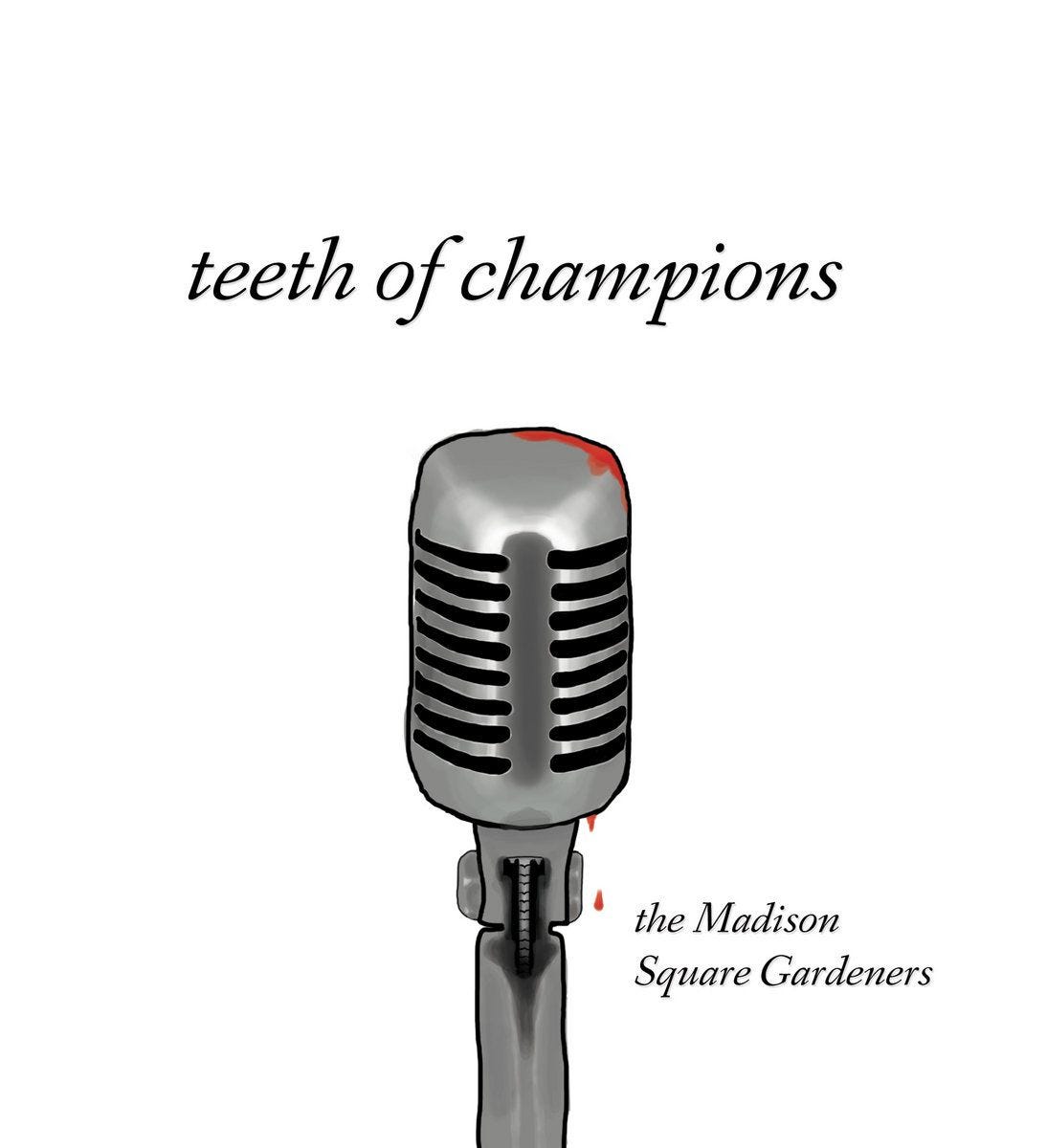
I found myself on the bike today singing the epic Tom Petty-esque song "Miracle Mile" by the Madison Square Gardeners, a band I first came across back when I was a working, minimally paid musician. This song is a monster, and Aaron Lee Tasjan (singer/writer) and the lads deliver, especially in the outro, a massive rock anthem. I remember the band being fantastic live, and the two EPs, Teeth of Champions and Taste the Thunder, are worth diving into, or back into. I’ve also just discovered Tune It Up, Dime It Out, which I’ve yet to examine. There was so much great music made while I was making music, and I love digging back into what was all around me while I did my best to join in and make the world a little better with what we had been gifted.
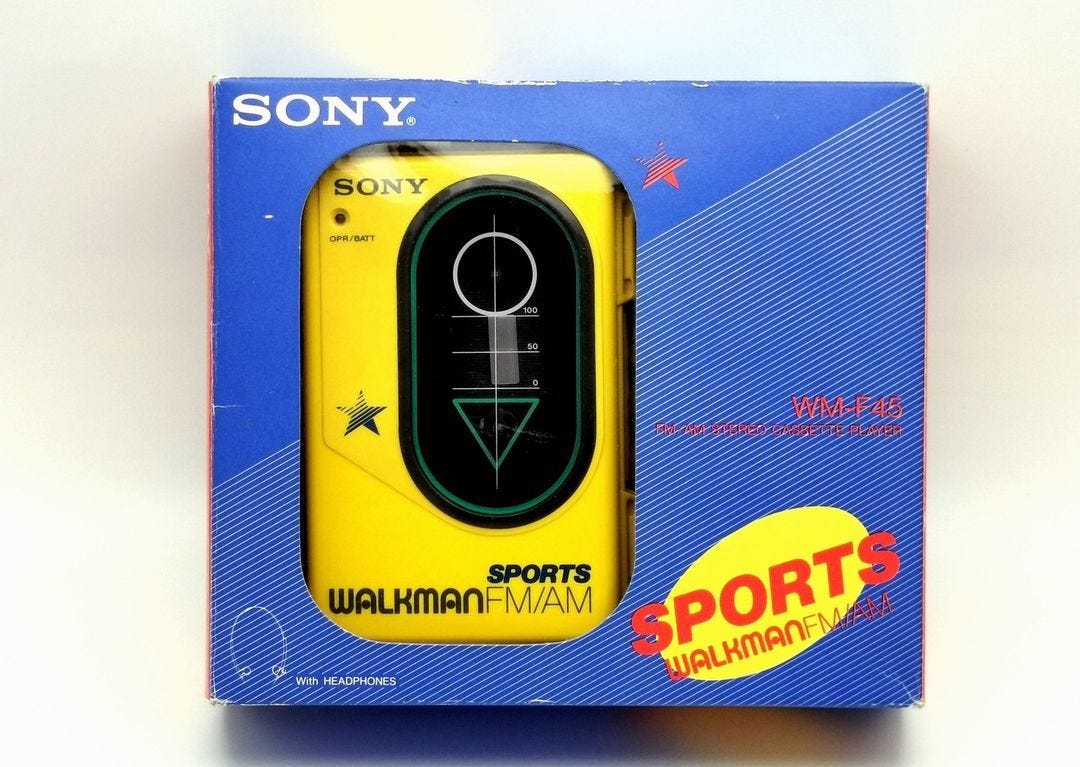
Retrospekt pleases me. I adore what they are trying to do, yet I am stunned you can get my old Sony Sports Walkman (F45 Yellow) for a whopping $349. Still, I love and appreciate the musical lifeline these products provided me. I remember this bad boy giving my Toto IV cassette some serious action on a school trip. My heart had been devastatingly broken, and “You Know I Won’t Hold You Back Now” was played, rewound, and played again as I wept into my ill-gotten schnapps and beer from a ski town somewhere in Europe. It is weird that the song and the Walkman are better remembered than where I actually was. I like that they are making new products alongside the old ones, and it is great that they collaborate and repair. Enjoy!
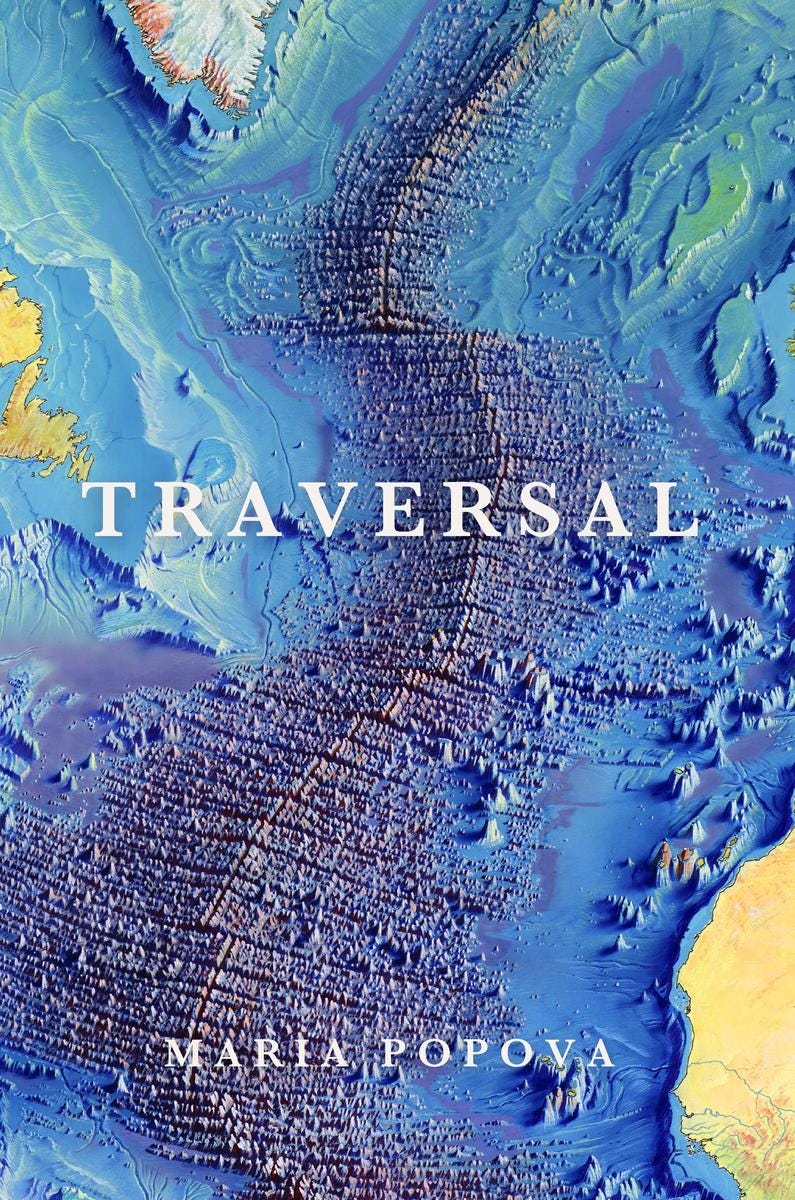
For the past month, I’ve been soaking in the joyous waters of Maria Popova’s majestic Traversal. This book, much like her superb blog The Marginalian, is a monument to her passion. A 608-page testament to the connections shared by creators we love (and their often less-well-known partners), and the bonds between creativity and science. Popova highlights under-recognized women who were frequently the pivotal points to events and breakthroughs typically attributed to men (often men to whom these women were subordinated). Popova also celebrates the exceptions to this, and conveys the stunning sweep of writing and science through the stories of, among others, Mary Shelley, Frederick Douglass, and Walt Whitman, plus figures like Fanny Wright, Dorothy Crowfoot Hodgkin, Marie Tharp, Alfred Wegener, Humphry Davy, Ruth Benedict, and Margaret Mead, whose remarkable journeys weave a history in which we are better able to recognize ourselves. I cannot commend this book highly enough. If you liked Philip Hoare’s SFTW #32 recommendation, this book will set you in that dreamlike, time-shifting space that can be so pleasurable to get lost (and very much found) in.
Mokkiri-zake:
Las Vegas struck me as a monument to a truth that America once knew and had somehow chosen to forget: If gambling had to be legal, it should be contained to remote cities in the desert that make you feel a little bad about yourself. - Sucker -The Atlantic - McKay Coppins
‘The natural flights of the human mind are not from pleasure to pleasure, but from hope to hope.’ - Samuel Johnson and the Perils of Hope - Unseen Histories - Peter Moore
The lives I find most impressive share a single feature: the person has found a way to make their own flourishing and someone else’s point in the same direction. What they share is the understanding that individual ambition and collective benefit are not at war.
Think of the company founder who builds something that solves a real problem, and whose wealth is inseparable from the value created for others; the doctor who chose the ward over making PowerPoints; the teacher who is remembered 30 years later because he made a teenager believe in himself at a pivotal moment. - The market failure beneath the manosphere - The Financial Times - Simon van Teutem
‘And now I must dress to receive the Planets, dear, as I won’t wish to take the time after they appear – and they will not wait for anybody. Lovingly W.’ - Supersensual Ear - The London Review of Books - Patricia Lockwood
…recovering is treated as a consumer choice made from abundance, when for many of us it must be attempted from depletion. - Peanut Butter on Crackers Can Be a Complete Meal - Overturned - Kelly Stonelake
If you haven’t become addicted to a social media platform, you may not be aware of what, exactly, goes on inside the head of someone hunched over a phone. It’s not clear that addicts are aware of it either. Jonah Weiner, a contributing writer for this magazine, wrote about this phenomenon on Substack, in a way I found alarmingly accurate. He described the experience of thinking in tweets, rather than normal thoughts, even when he was far from his phone, in this case washing the dishes and finding he was low on soap. His first thought was to water it down to make the bottle last longer. But then, everything that followed was deranged by the internet. Instead of having normal thoughts, Weiner wrote, “Thanks to Twitter, I’d think something exponentially more inane and annoying, such as, ‘The masculine urge to water down the dish soap … ’ or ‘The two genders [picture of brand-new dish soap vs. picture of old diluted dish soap].’” It goes on from there: “Men will dilute the last millimeter of dish soap rather than go to therapy”; “No but the way I just diluted the dish soap.”
Every one of these joke structures is immediately recognizable to anyone who has spent a lot of time on X: What Weiner is describing is the imitative behavior that sustains and nurtures memes. But more important, he’s describing what this behavior requires, which is the hijacking of your frontal lobe by the incentives of the platform. Disappear into your phone for long enough, and your phone will disappear into you, putting you to work for the platforms even in your downtime. People have taken to calling this “brain rot,” which isn’t a bad term for it at all, not just because phone slang is stupid and annoying — though it is — but because it really does rework your gray matter.
In 2024, “brain rot” was selected as the Word of the Year by Oxford University Press, beating out other meme words like “lore,” “demure” and “slop.” Last year, it was “rage bait” — another term for another kind of online distraction — which beat out “aura farming,” another meme. In 2023, it was “rizz,” which beat out “beige flag” — something from TikTok. Since 2021’s “vax,” Oxford has consistently given the W.O.T.Y. to some sort of internet meme. Maybe it’s because the public votes on it, but maybe it’s because this is what our culture produces now. It almost seems like a direct challenge to the idea that language evolves to describe ever more of our world. What if it can instead degrade, or become caught in the gears of a more powerful meaning-making engine? - Forget the A.I. Apocalypse. Memes Have Already Nuked Our Culture. - New York Times Magazine - Willy Staley