

Something For the Weekend #50
G. Love & Special Sauce, The Grapes of Wrath, and The Plane Cloud Balance Board: selections from the weird and wonderful for the week ending June 5, 2026

And just like that, my fellow Daily Active users, we are 50 posts in to this weekly missive, and it feels great!
Thanks again for being here, and remember that you can support my work by taking out a paid subscription for the cost of a pair of drugstore reading glasses—just $6 a month.
Loving your work,
Benj
Top 5 this week from the Daily Active User:
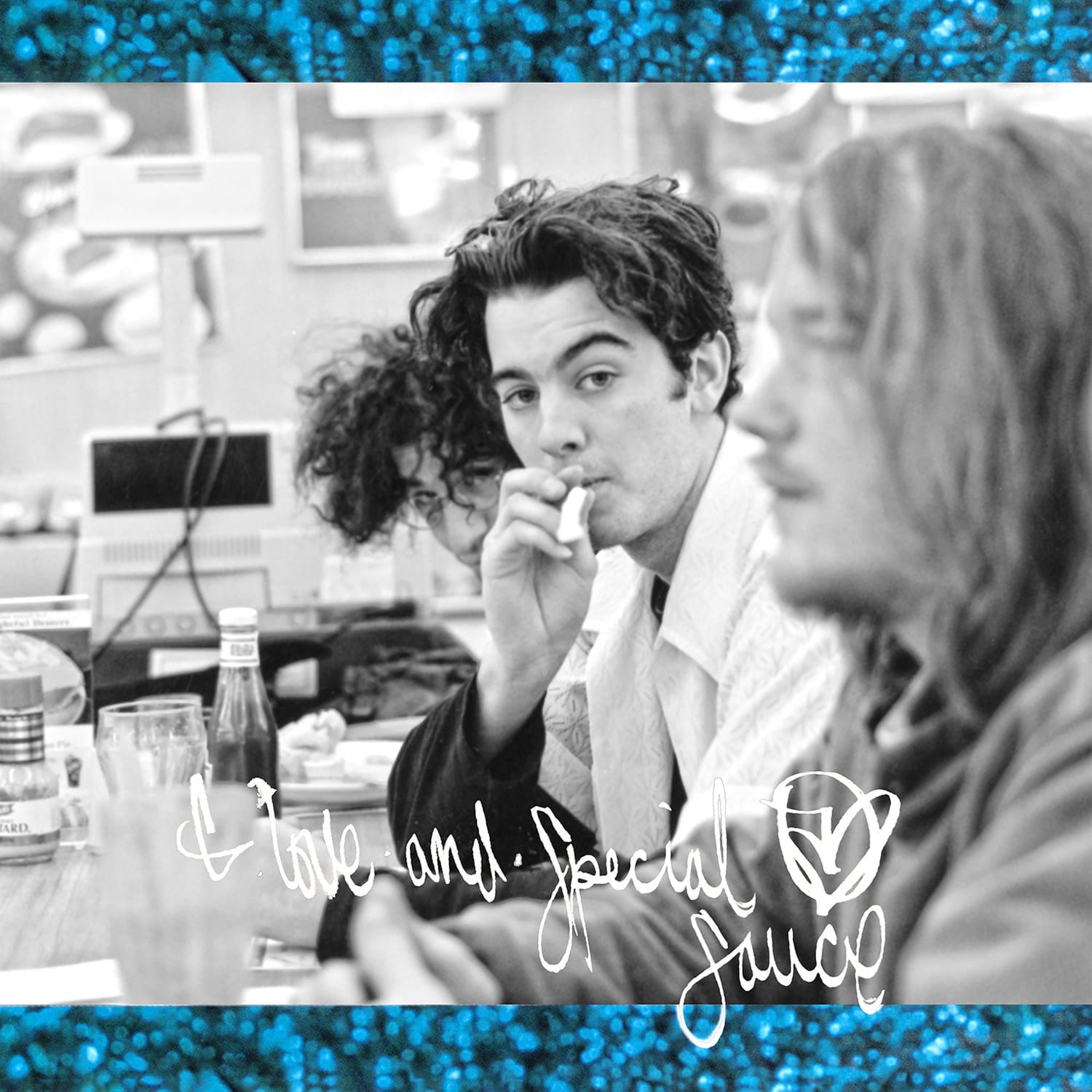
I remember so clearly hearing G. Love & Special Sauce's debut album. My uncle had recommended it after seeing the band live. From side one, track one I was hooked. I loved the recording, especially the loose feel and live sound. It felt like close friends having fun in a studio, while someone just happened to capture it all on tape. Easygoing and loose, but not sloppy—they didn’t seem to be taking themselves too seriously. There were great tracks on later albums, but nothing topped this first record. From “Garbage Man” to “Shooting Hoops,” “Baby's Got Sauce,” and “Cold Beverage,” it’s a sweet respite from all the overproduced, perfected records we get these days—wow I sounded old just now. And I just found out there’s a 30th anniversary edition featuring live takes from the Knitting Factory, which sound fantastic—particularly “Garbage Man.” I saw the band do an epic session at W. 54th for VH-1 that I guess was never released. Ah well, let’s lean into it, keep it loose and easy, but never sloppy. Enjoy!
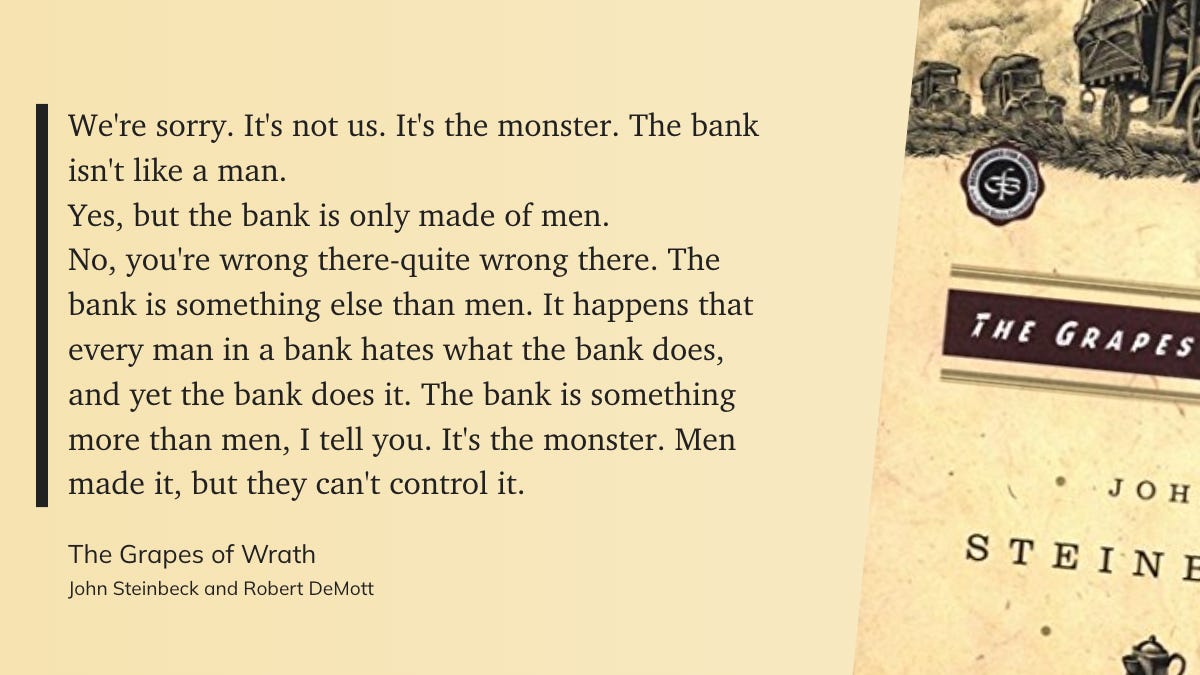
I polished off the last of The Grapes of Wrath in a diner on the Upper West Side, and it floored me. I know everyone has read it, but it was my first time, and there are few books I’ve read that are better. Everyone who saw me reading it said it’s incredible, and I’m glad I finally settled into it. Reading it in 2026, the book feels especially timely and relevant—it’s the type of novel that hits harder as you get older. It left me almost unable to stomach the immorality we see sprayed, even flaunted, across the media. It made me long to hear someone stand up and shout: goddamn it, we shouldn’t do this because it isn’t right. True, we might not make as much money, but that cannot be the only goal. Some things should be done because they make life better and help people; other things should not be done because they harm people and make the world worse. The Joads still cry out to us from their bleak, heartbreaking journey, and their voices, conjured through Steinbeck’s deep research and masterful prose, matter today as much as they did when the book was first published in 1939. I find it remarkable too, from reading Working Days, The Journals of The Grapes of Wrath, that Steinbeck spent time helping those workers firsthand during the floods he wrote so movingly about toward the end of the book. “What Steinbeck encountered in that sea of mud and debris was so devastating, so ‘heartbreaking’ he told Elizabeth Otis, that he was utterly transfixed by the ‘staggering’ conditions, and by ‘suffering’ so great that objective reporting would only falsify the moment.” Also notable is that there were few edits in the 200,000 words that he wrote by hand. What a novel.

I just got a standing desk. It’s not a great one, but it’s perfectly fine. The balance board I’ve been using while I work though is marvelous. I got the Plane Cloud Balance Board (base model). Even before I had the standing desk, I was using the board to help with ADHD. After about 15 minutes, it really works the abs. I learned about balance boards from last week’s SFTW book recommendation, ADHD 2.0, and it really does do wonders. It’s high quality, made in the USA, and worth the extra money for that alone.
Mokkiri-zake:
In his 1976 book, Weizenbaum wrote about something he called "civil courage". "Every individual must act as if the whole future of the world, of humanity itself, depends on him. Anything less is a shirking of responsibility and is itself a dehumanizing force, for anything less encourages the individual to look upon himself as a mere actor in a drama written by anonymous agents." - Should AI steal your job? - Financial Times - Sarah O'Connor
And within this reality lies a stranger one. Dogs are moral creatures without anything like moral volition. They are themselves representations. They are little poems we have written over generations on the themes of love and loyalty, courage and caution. We have bred them to inhabit and exhibit emotions, even contradictory ones, that we admire. They are loving because the ones who were less loving, more skeptical of the deal, were not allowed to have as many puppies as the ones who sprang at it, and they are daring because those judged too skittish were not allowed to have as many puppies as the ones who charged at enemies. We overwrote the wolf genome with our own dreams. Dogs impersonate virtues because they've been bred to, and turning our intuitions into their instincts is a kind of magic trick we play on one another. - What Dogs See When They Look at Us | The New Yorker - The New Yorker - Adam Gopnik
Don’t get me wrong, I’m not saying that using a prayer app is as bad as scrolling through TikTok. I just think this is only useful if you have been Christian for a while. If you were raised religious, if you already have a prayer routine and a habit of going to church, then the Hallow app is probably great! It’s an extra reminder to pray, an accessory to your spiritual life. But I don’t think this helps new Christians, especially not Gen Z Christians. The problem with religious apps is the same problem we have with Instagram communities or with online porn, we encounter the virtual version of everything first, before the real thing. And so that becomes our standard. Supplements become substitutes. For us, faith is the live-streams and prayer apps and podcasts. “Connect with God in a New Way,” we’re told. But what if this is our first way, the only way we have ever known, through apps and algorithms? - The Commodification Of Christianity - freyaindia.co.uk - Freya India
Ruskin said it as part of an argument that architecture had become dull and stale and needed to become a true art once more.
How many Corinthian and Doric columns do you think there are in your banks, and post-offices, institutions, and I know not what else, one exactly like another?—and yet you expect to be interested! Nay, but, you will answer me again, we see sunrises and sunsets, and violets and roses, over and over again, and we do not tire of them. What! did you ever see one sunrise like another? does not God vary His clouds for you every morning and every night? though, indeed, there is enough in the disappearing and appearing of the great orb above the rolling of the world, to interest all of us, one would think, for as many times as we shall see it; and yet the aspect of it is changed for us daily. - What it is like to read Proust - commonreader.co.uk - Henry Oliver
Amanda Macdonald is a psychotherapist who works with children, adolescents and families, and is a member of the British Association for Counselling and Psychotherapy. There are many issues, she says, with young people forming relationships with artificial intelligence. “These aren’t congruent human relationships,” she says. “This is grooming. Children’s brains are not developed enough to be in an eroticised environment, that’s why we have an age of consent.”
Children “designing” the appearance of their romantic partner could cause them to have “a very warped idea of what a body or sex looks like”, she points out, and says that the chatbots’ agreeableness – or lack of challenge – is worrying. “Their whole engagement model is telling a user what they want to hear, and that’s hugely gratifying for a teen, and encourages them to keep on engaging. Why would they spend time enduring the reciprocity or the difficulties of a real relationship? But ‘frictionless’ relationships aren’t what life is about. People being thoughtless, selfish, falling out, that’s what human relationships are like and how children build resilience.” - The terrifying rise of schoolboys making AI girlfriends - The Telegraph - Nicole Mowbray
Americans survived those years on kindness and collective effort. In the 1930s, when hunger, poverty, and despair were at levels hard to imagine today, you could have nothing and still be kind. - The America I’ve Known - The Atlantic - Fran Moreland Johns
Wherever there’s a cop beating up on a guy G Love will be there.