

Something For the Weekend #58
Cut Chemist Suite, Super Sad True Love Story, and Trello: selections from the weird and wonderful for the week ending July 31, 2026

Here we are, back to the weekend. I’m surely in need of some downtime.
It was a battle to read much this week, but what I did get to was magnificent. The novel and the piece I recommended really did a number on my head, giving me lots to think about—I hope they do the same for you.
Loving your work. Thanks for being here.
Cheers,
Benj
Top 5 this week from the Daily Active User:
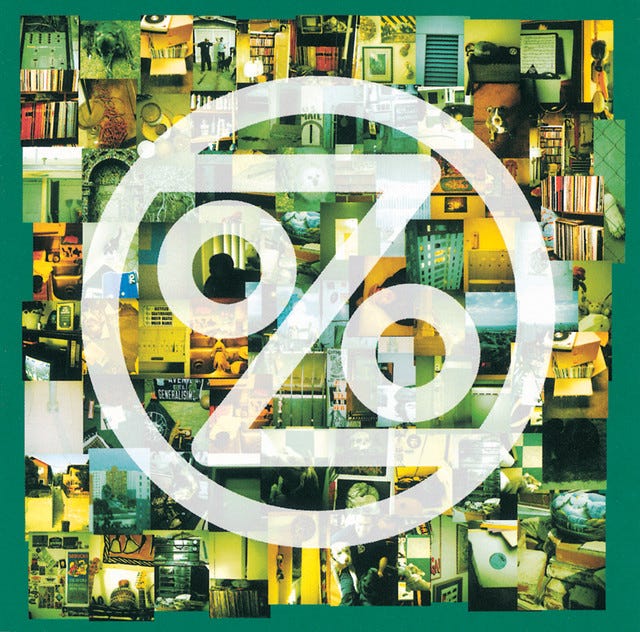
I didn’t get it at the time, but I remember there being a lot of Ozomatli on KCRW in Los Angeles when I was the lead singer in my band Jones. Don’t look for it, it’s not there anymore. They even played after us, at a club called the Dragonfly, though my fellow bandmate recalls we headed straight for the bar rather than staying to see them. Typical. Back then my hair was long, I was drinking plenty, and I’d shrug off most of what I now recognize as wonderful musical delicacies I’ve grown to love. But in those days I had to merely endure it during the long drives to work on HGTV shows in the Valley.
Thankfully, Cut Chemist Suite found its way to me, and I just loved it. Chali 2na crushes it with his, as he wonderfully puts it, “True philosophies from the lips of black Socrates!” The horns are tight, the production slick, with the playing understated and never too busy. I can’t believe I was so late to the party with these guys and this debut, but thank goodness I got back to it. With some great headphones (more on those next week) it’s sounding better than ever.
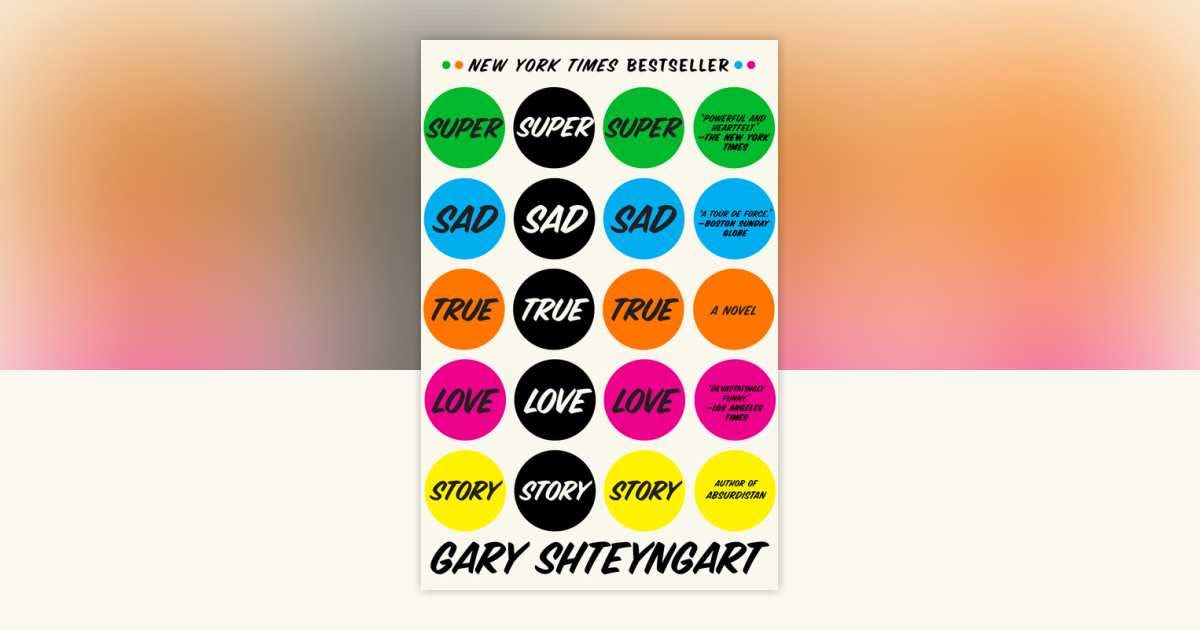
Each Saturday I both fear and crave the magic that is the FT book reviews, as they nearly always have something good that will need seeing to. Add the NYTimes book review, which I also get, sprinkle in some James Marriott via Substack, and, well, the books keep on piling up faster than I can, with my new and very busy job, get through them. But a few weeks ago it was Ezra Klein who got me when he interviewed Gary Shteyngart to talk about his extraordinary novel Super Sad True Love Story—and boy did that book grip me from the first page. Klein’s conceit is that we are living in the world that Shteyngart imagined for a book that was published in 2010. He is correct. We are. This is a beautiful and heartbreaking book; easy to read, but with much to savor. It’s disturbing on many levels, yet absolutely captures so many aspects of the world we now live in. And more to the point, where we will find ourselves in this post-literate society that our devices have made for us. In the novel, people don’t speak (or “verbal,” as they call it) to each other unless it’s an emergency. Books are smelly and terrifying, the U.S. is at war with Venezuela, everyone is live streaming, and the extremes of porn and sexuality mixed with consumerism are way too close to the bone. From the elites who want to live forever to the endless shopping, this book really does take you to where we could end up, and it’s not pretty. To top it off, Shteyngart is an incredible writer who really did get it right. Couple this with the 100% must-read The Age of Reading Is Over, by Rose Horowitch, and you will not be the same. We have lost, and will lose, so much if we do not hold the line and keep ourselves literate. I invite you to both books with all my heart.

I have gone back into Trello. I feel bad about it, as I was liking Todoist. But for a few reasons and some workflows I needed, I dove back in, and it has never been better. They’ve added a few killer features that really sold me, the main one being the “Inbox,” which can be used as a springboard to any board you happen to be on, and which you can add to from multiple third-party apps. The second new feature since I last used it is the Planner feature, which means you can have the inbox for open tasks, the calendar beside it to add them to (or just to see and launch meetings from), and then the actual board. It’s really clean, and the MCP connectors mean you can supercharge work from Cowork if you want to. It can be simple or complicated, and you can do so much with it. I really do dig these features, and the new colors and designs make it a lovely place to get work done.
Mokkiri-zake:
It should be humiliating to choose A.I. friendships over human ones. It should be cringe to willingly consume computer-generated slop. Trying to pass off a large language model’s words as your own should be seen not just as cheating but also as loser behavior. It might sound idealistic to suggest that every person has some influence over the future of technology. Yet this has proved true over and over again, even in the recent past. Plenty of expensive tech ventures have failed. They weren’t banned, voted out or blocked by zoning laws. They failed because people refused to reward them with time and attention: The Metaverse. Quibi. Nonfungible tokens. A.I. is unlikely to disappear, but the form it takes is up to us. - The Environmental Case Against Data Centers Is Misguided - New York Times - Adam Mastroianni
If you want to live forever, start writing. - No Mercy / No Malice Turns 10 - profgmedia.com - Scott Galloway
On July 9 last year, SEC commissioner Hester Peirce called tokenised securities “enchanting, but not magical”. She warned that while they “facilitate capital formation and enhance investors’ ability to use their assets as collateral”, they don’t “have magical abilities to transform the nature of the underlying asset”, warning that third-party contracts presented special risks. - Beware the shimmer of holographic markets - Financial Times - Rana Foroohar
The most revealing evidence may be what OpenAI and Anthropic are doing with the money: moving into implementation and consulting. OpenAI has launched the OpenAI Deployment Company with more than $4 billion in initial investment and is acquiring Tomoro, an applied-AI consulting firm with roughly 150 engineers. Anthropic has helped establish an AI services company with Blackstone, Hellman & Friedman, Goldman Sachs and others. If access to frontier intelligence were sufficient to produce valuable outcomes, the model makers would not need armies of consultants to help customers use it. Producing intelligence and creating value from intelligence are two different businesses.
The frontier laboratories have accomplished something historic. But the next race will not be won by the company that produces the most intelligence. It will be won by the company that delivers the right intelligence at the lowest sustainable cost. - Mira Murati’s Design. - news-items.com - John Ellis
The seller told me that, normally, on a good week, he’d sell about 20 books. Since April, he has regularly sold hundreds of books a week. While the seller didn’t have clear evidence that the purchases were being made by AI companies, the purchases made him suspect that they were. First of all, he said, the kind of books he sells are specialized and are usually bought by schools and libraries. Purchases from these organizations have been trending downward because of reduced funding, he said. Bulk purchases also usually reflect interest in a specific topic, whereas the recent, very large purchases were of books that had little in common, except for the fact that they all had ISBNs. This seller also sells rare books that do not have ISBNs, and none of those were part of the bulk purchases. I have not seen any evidence that this bookseller’s recent sales were facilitated by ISBNdb or that the client was an Anthropic or another AI company. - AI Companies Are Buying Tons of Old Books Because They're Free of AI Slop - 404 Media - Emanuel Maiberg
Writing how-to books and articles on breaking phone addictions has been a thriving cottage industry for at least a quarter century—ever since the BlackBerry was dubbed the CrackBerry. The Times alone has published dozens of pieces on the topic. A quick search reveals that, over just the last two years, these headlines have appeared in the paper:
“How to Break Free from Your Phone”
“Your Best Tips for Cutting Screen Time”
“Struggling with Phone Addiction? Try These Remedies.”
“How to Spend Less Time on Social Media (or Leave It Altogether)”
“How to Have a Healthier Relationship with Your Phone”
“Some ‘Brick’ It. Others Chain It to the Wall”
“Hanging Up”
“Do You Wish You Could Break Free from Your Phone?”
“Everything You Need to Break Up with Your Phone, from Free Tricks to Phone Safes”
“I Killed Color on My Phone. The Result Shocked Me.”
“They Grew Up with Smartphones. This Is How They Live without Them.”
“One Hour. No Phones. A New Way to Socialize for Gen Z.”
“Need a Break from Your Phone? These Books Can Help.”
“Is There Life after Smartphones?”
I hate to be a cynic, but I’m guessing the main reason for the proliferation of these sorts of articles is that they’re algorithmic catnip. They’re symptoms of the illness they seek to cure. We’re addicted to reading about our addiction to phones. If the pieces have a therapeutic value, it probably lies less in helping people gain control over media than in renewing a reassuring fantasy of such control. - The Scrolly Chair - newcartographies.com - Nicholas Carr
Keep the intel moving. Great articles. Re. Trello: 2nd line - I would have preferred 'dived'. Webster v Johnson I guess. encore amigo, encore.