The New Work
Staring into a machine that will never love you back

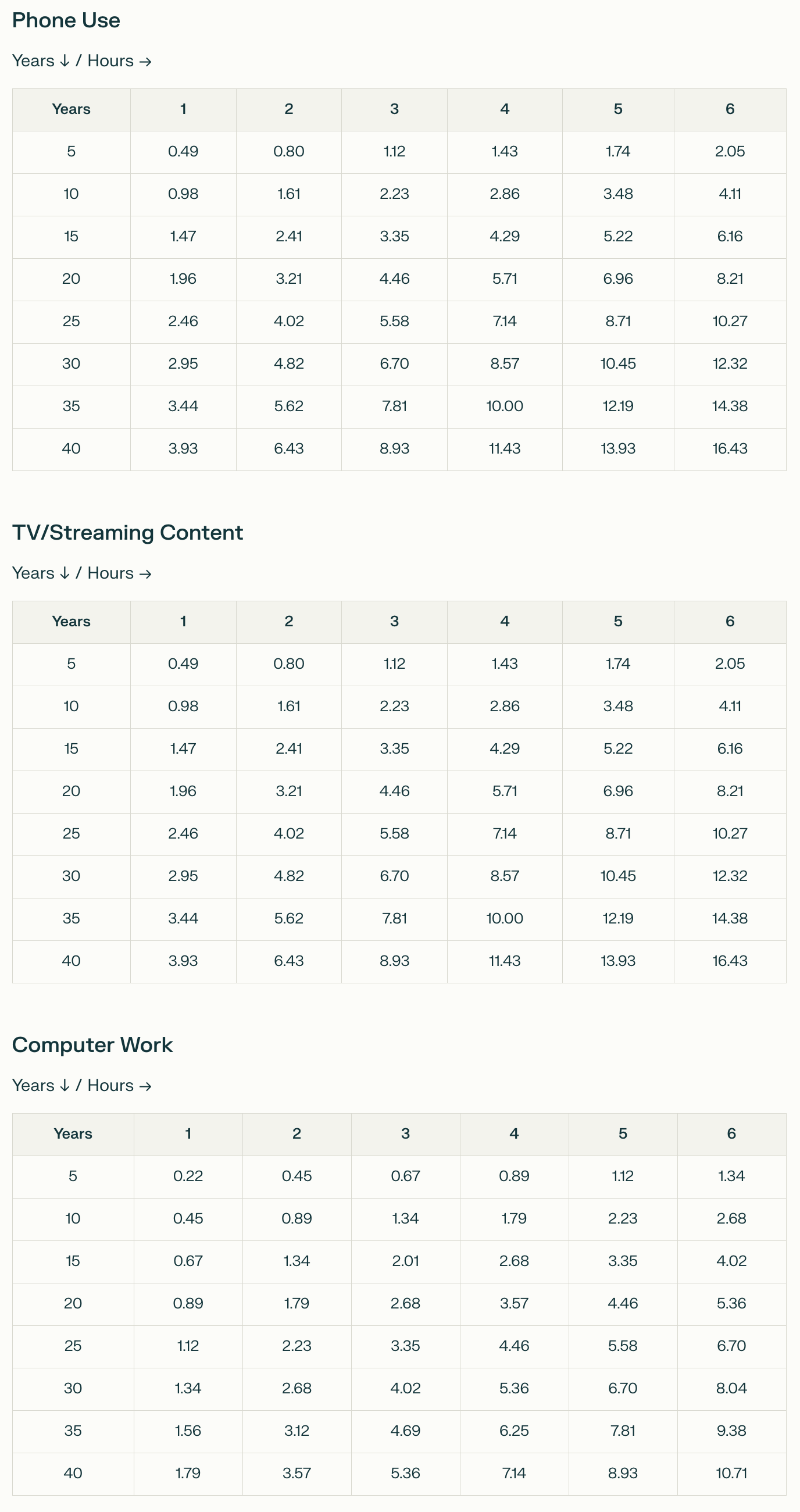
Maybe you spent two hours on your phone yesterday.
Add a couple of hours of television as you wound down for the day, as I did.
Perhaps like me you spent six hours of your workday on a computer.
Take out the weekend computer time, and add a little more phone and TV time.
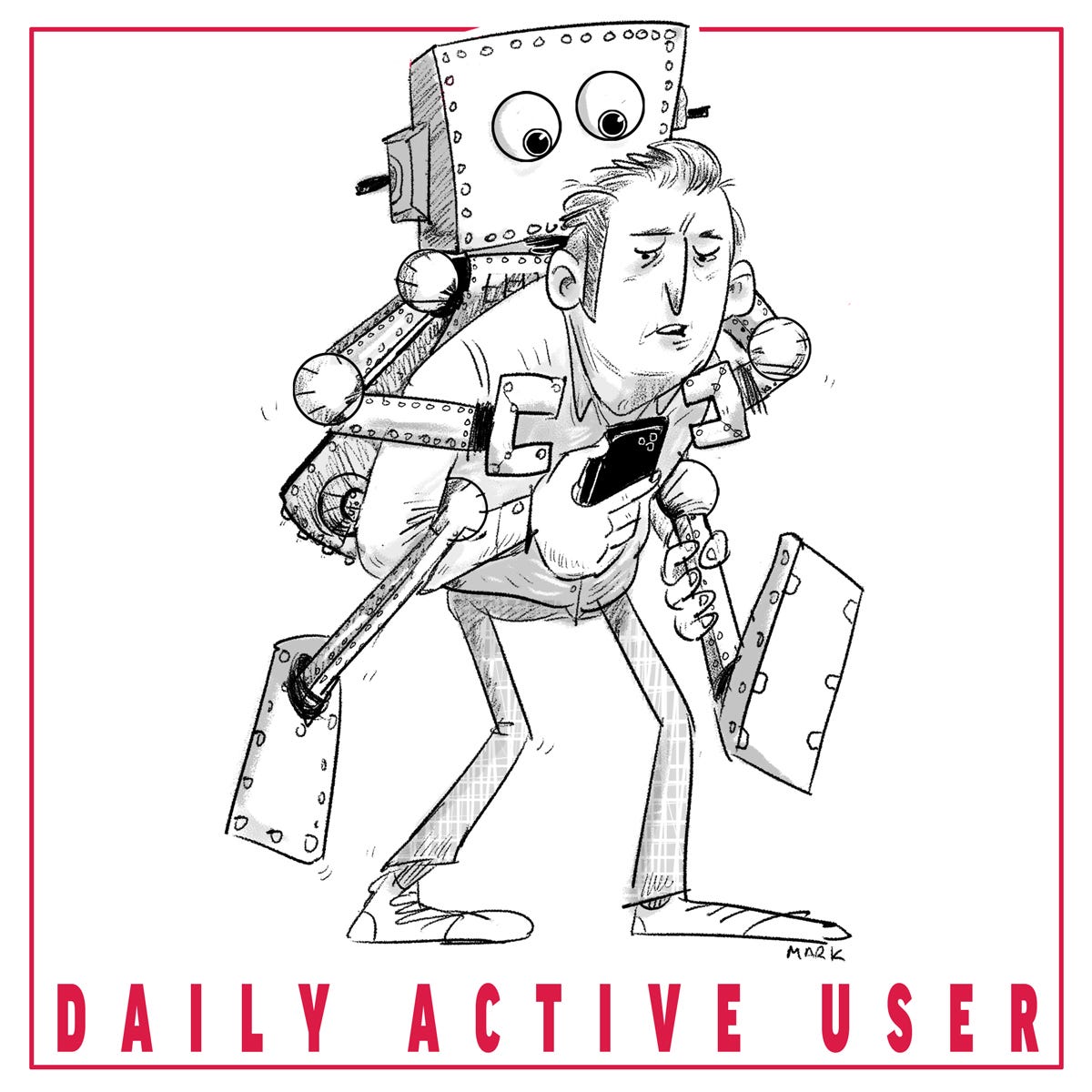
You are a Daily Active User, and so am I.
These were my hours before I started to bend the curve downward with a Light Phone and screen management. Around 5.9 of the last ten years spent staring at a screen. I suspect it was much worse, but those are hard numbers to reckon with.
There’s a saying I love that I’ll paraphrase as: No one lies on their deathbed wishing they'd spent more time in the office. That was from an era when most of us left our work behind when we clocked out. There was the work you had to do, and then there was a life to be lived. Out there with people, with family, out in the world.
This is no longer the case. We have our work, and then our jobs, in which, as Douglas Rushkoff has put it, We are not the product of the tech companies (and their “free” products) but their unpaid workers. We, Daily Active Users, have to post, text, comment, scroll, browse, and consume. We have to keep the numbers up. The eyeballs glued. If we don’t spend 11.78 of our next twenty years on our screens, we won’t keep driving the numbers up for the tech CEOs we serve.
Crafting posts for social media that you don't get paid for; curating your life with recommended restaurants, stores, and experiences; slowly nudging toward behaviors maximized by an algorithm—being in the office and being out of the office eventually just blurs into a prolonged screen gaze. And for our kids, school is beginning to resemble this pattern more, and from a younger age.
We are not products of these platforms so much as the labor force. We dutifully read, click, post, and retweet; we become enraged, scandalized, and indignant; and we go on to complain, attack, or cancel. That’s work. The beneficiaries are the shareholders. - Douglass Rushkoff
It wasn't intended to be this way (and it doesn't have to be this way), but that's a lot of life to be spent staring into machines that will never love us back.
I’m guessing that the new version of that old adage will be: No one lies on their deathbed wishing they'd spent more time on their phone.
This technology doesn’t love you. The people behind it don’t care about you. Most forbid their kids from using it, even as they angle to get our children on screens for as much of the day as possible. Some schools are even starting out with chatbots. More Daily Active Usage, fresh Daily Active Users.
If you have kids, how many of the next five or ten years do you want them to spend looking at a screen?
How many of the next ten years do you want to spend looking at a screen?
Is that the life you want?
As I’ve shared before, in January 2024 I set out to reduce my screen time. So far I’ve been successful by taking one day a week off completely from my computer (which I am blessed to be able to do), and using a Light Phone between the hours of 7 p.m. and 10 a.m. most days. I read more and connect with more people than ever. If I can hold the line, I will have clawed back about four and a half years over the next thirty. Time I can spend with people I love, doing things that I love, out there in our weird and marvelous world. I’d call that a good start, and an optimistic target.
This screen-based future is an option, but it’s not inevitable.
Here are the numbers; you make the call.