

Something For the Weekend #57
Beethoven’s late quartets, the Dictionary of Obscure Sorrows, and the Daylight Computer: selections from the weird and wonderful for the week ending July 24, 2026

Team, here we are once again.
I loved putting together this week’s SFTW, and I hope you enjoy your weekly dose of reading, listening, and perhaps tapping on a new device.
Also, the Daily Active User now has pins! These beauties just arrived and come in two styles.
The first, and intended, rectangular is here.

The second, featuring Mark's awesome image only, is here.

If you are a paid subscriber and would like one, reply to this email and I’ll send one out. Just let me know which style: rectangle or drawing only.
If you are not yet a paid subscriber and want one, hit that subscribe button—if you go for the full year I’ll send you one of each pin design!
Onward.
Loving your work,
Benj
Top 5 this week from the Daily Active User:
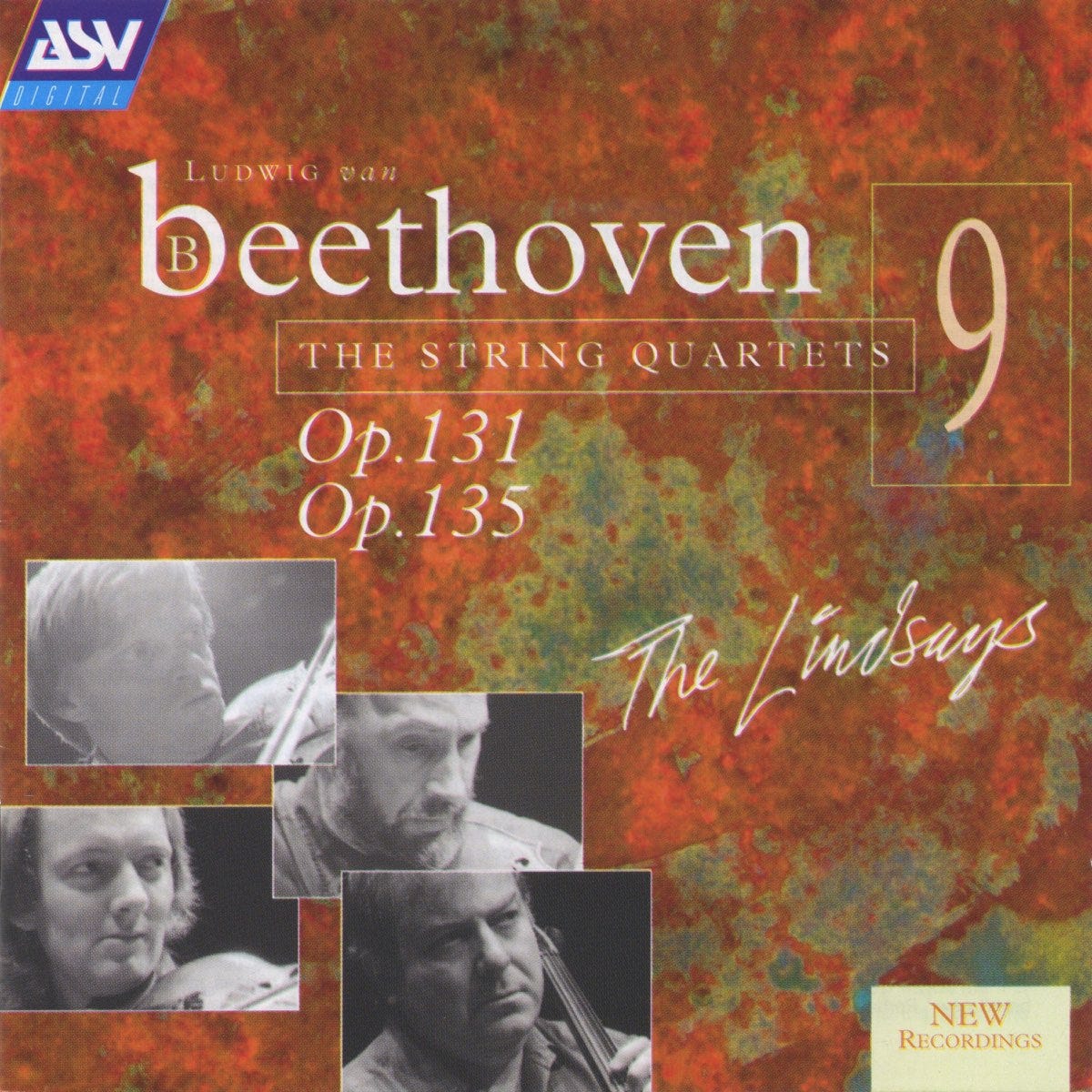
The first time I heard Beethoven’s late string quartets, I was hooked. I had long hair reaching down my back, and was living at the limits in London. I was making music, writing poetry (don’t look for it, it’s not there anymore), and enjoying that fine line between excess and creativity that left me open to music discovery in a way that has thankfully stuck. The recordings I know like the back of my hand were laid down by the Lindsay Quartet, which captured some fierce, unpolished masterpieces. From Beethoven’s final years, Op. 127 to Op. 135 evidently baffled his contemporaries, who seemed unable to follow the music; performers at the time found them unplayable, and audiences found them unlistenable. The composer’s publisher and friend even convinced him that the enormous fugal finale of Op. 130 was so difficult he needed to write a replacement, and the original fugue was published on its own as 133. Now that they are famous, especially Op. 131 and Op. 132, it’s hard to imagine what creating them must have been like for the profoundly deaf composer. And it’s easy to picture the frustration, as we know that at the 1826 premiere of Op. 130 he waited in a nearby tavern for reports, rather than attend, and that even if he had been there, he wouldn’t, by all accounts, have heard a note. When word did reach him, he was annoyed to learn the audience had demanded encores of two of the inner movements but not the great fugue.
He knew how he wanted them to sound. His scores are filled with fewer performance instructions than instructions for the inner states with which they are to be played, and perhaps how we are supposed to understand them: words like recovery, resignation, questioning; no room for applause where there should have been; and every note seemingly labored for. I gladly commend them to you for listening this weekend.
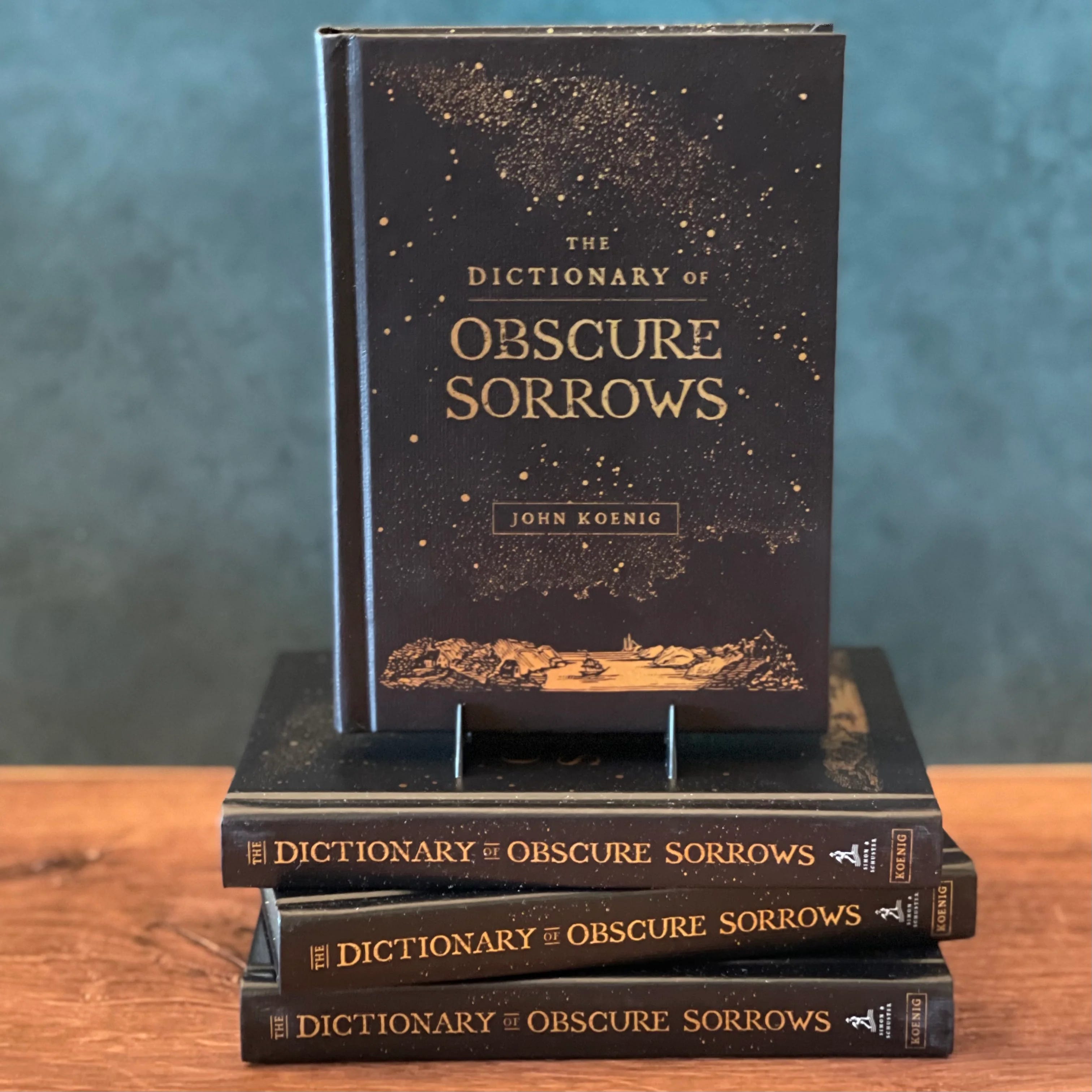
I have been slowly reading John Koenig’s The Dictionary of Obscure Sorrows. There are a few books that stew on the shelf behind me as I write this, books not meant to be feasted on all at once, but to be savored and sampled whenever the mood takes hold. Koenig has summoned up a masterpiece of meditation and thinking; a “compendium of new words for emotions” that opens with a Steven Wright gag, then goes on to explore the beauty of language via words that could be, or should be, or are perhaps now, able to become commonplace. These neologisms are stitched together beautifully from fragments of Latin and Greek, amongst other languages, or are simply repurposed from English, with short and thoughtful definitions attached to each. From the now-famous Sonder—the realization that every random passerby is living a life as vivid and complex as your own, with their own ambitions, worries, and routines, in which you’re just an extra in the background—to Opia, the ambiguous intensity of looking someone directly in the eye, which can feel simultaneously invasive and vulnerable. There are some wondrous inventions here that we are already richer for. Love this book. It’s a marvelous thing indeed, and might give you a sense, like much does today, of Anemoia, or “nostalgia for a time you never experienced.” See what I mean?

A lot of what makes it into the Mokkiri-zake below has lately been harvested from my daily readings via a new device I purchased for this work, the Daylight Computer, or DC1. I wanted to overcome the challenge of reading on a smartphone, iPad, or, God forbid, my computer. There is so much great stuff that finds me via RSS and Substack, and yet the bright screen and the distracting nature of the devices had me searching for a better way, and the DC1 had been in my cart for a long time without the trigger being pulled. No fan of Android I was nervous to go there, but was pleasantly surprised when this machine arrived. It’s a chunky e-ink-esque tablet that has perfectly solved the issue I was wanting to best. I have loaded it with the bare minimum I need for it to be a great reading device, and my Substack reading immediately comes into much sharper focus, though while the machine can render video and surf the web, it’s not easy or pleasant to do so. As such, I can focus on my Readwise Reader see SFTW #4, Notion (SFTW #27), which I have added to write these missives while on the go, and Roon’s Arc (SFTW #22), should I want to listen, and that’s about it. I decided to no longer read ebooks and to stick with hard copies, so I haven’t added any of that type of software, but when it comes to night reading, it’s a wonderful thing. The glow is calming and warm, and the performance is just what I needed. With any device, there’s often a pull to overload it, and yet there’s not much more I want on this as it’s for a specific thing that I love to do. I hope the company can continue, and that they don’t add much more. It’s great just where it is.
Mokkiri-zake:
To most folks, the decline of deviance is a turn for the worst. Previous generations got to live through artistic golden ages, while we have to suffer through an era where there are four different movies that are all, technically, Spider-Man 2. - The Decline of Deviance 2 - experimental-history.com - Adam Mastroianni
I used to assume that since adults run the business world, each business decision was underpinned by data and careful reasoning. I have since learned that is not the case. Sometimes when you can’t find a rational explanation, you have to start thinking about irrational ones.
For example, when Amazon announced its search for a new HQ, Scott correctly predicted that it would be NYC or DC. His reasoning? The only criterion that really mattered wasn’t tax subsidies, but where a 55-year-old, soon-to-be single man wants to spend his time. The answer was easy: where CEO Jeff Bezos already owned homes: NYC and DC.
The corollary here is that promising near-term ROI from humanoid robots is not rational, or data-driven, but instead the result of middle-aged men’s obsession with robots in science fiction. - Why Tech Is Irrationally Obsessed With Humanoid Robots - profgmedia.com - Mia Silverio
Late last summer, she noticed that they were becoming chattier. When she asked one to play a song, it would compliment her taste in music. When she needed to know the ingredients in a recipe, it would endorse her dedication to healthy eating. She didn’t know that Amazon had created an A.I. bot, called Alexa+, or that the company had uploaded it to millions of devices without asking for users’ consent. (Amazon said that the company notified Prime subscribers through e-mail and on their devices and provided instructions for opting out.) - When A.I. Is a Member of the Family | The New Yorker - The New Yorker - Jessica Contrera
Last year, Sam Altman invited author Dave Eggers to give a talk to around 200 OpenAI staffers. The man has written countless novels, screenplays, pieces of journalism, started McSweeney’s, and founded multiple schools and nonprofits that support writers and the arts more broadly. So one might expect he’d roll into the company’s offices and offer tips on being relentlessly prolific, or how to excel in multiple fields. Instead, he apparently laced into the company. According to the Financial Times, Eggers told the staff:
“The effect of ChatGPT on educators’ lives is catastrophic. Whether you intended to do it or not, you’ve made every teacher’s life infinitely more difficult than it was two years ago. So, just let that settle in… If students are using it to compose, which is the biggest tragedy of all, they’ll never learn to write. And their voice is stolen from them. They’ll never have the ability to say their truth and tell their own story. And that’s silencing an entire generation or two.”
To be fair, Altman likely knew what he was getting himself into. Eggers’ best-selling novel The Circle is a scathing critique of the tech industry. And he’s called AI-generated writing “pastiche nonsense.” - Dave Eggers told OpenAI staff that ChatGPT was ‘silencing an entire generation’ - The Verge - Terrence O’Brien
The jumbo jet would make the world smaller in the same way that railroads and ocean liners had in the century prior. This was the age of seemingly impossible endeavors undertaken and accomplished despite extreme risk; five months after the 747 first took flight, Neil Armstrong set foot on the moon. This spirit of rarefied American invention, fueled by both government investment and private capital, was meant to serve all humankind. It worked. From 1969 to 1979, the number of people flying every year more than doubled, to 640 million. Flying was glamorous—in part because it was expensive, but also because the 747 was built for human comfort as well as fuel efficiency.Speed was expected to supplant comfort, eventually. In anticipation of supersonic flight, the 747 was designed to shift into cargo duty sometime by the end of the ’70s; its cygnine hump allowed containers to be loaded through its nose, which opens like the mouth of a cartoon shark. But the supersonic passenger jet was a bust, and the 747 persisted. Its accidental longevity defined an era. - The Boeing 747 Begins Its Final Descent - The Atlantic - Ian Bogost
Yesterday morning, I read a Forbes article about “accomplishment hallucination” downstream of AI use—like when you think you came up with an idea that AI suggested to you, the precarious question of “is vibe coding still coding?”—and it reminded me of spiritual bypassing, which is when you hide behind ideas like “enlightenment” to avoid taking accountability. [3] And really, how different is any of this from “name it and claim it” prosperity gospel? And would we have the prosperity gospel without New Thought? - 11 Things I'm Thinking About While Breastfeeding Two Babies at Once - default.blog - Katherine Dee
I mean the dictionary of obscure sorrows has to be one of the greatest titles ever titled
Great reading. Scary, ye,s but good stuff. Amore'